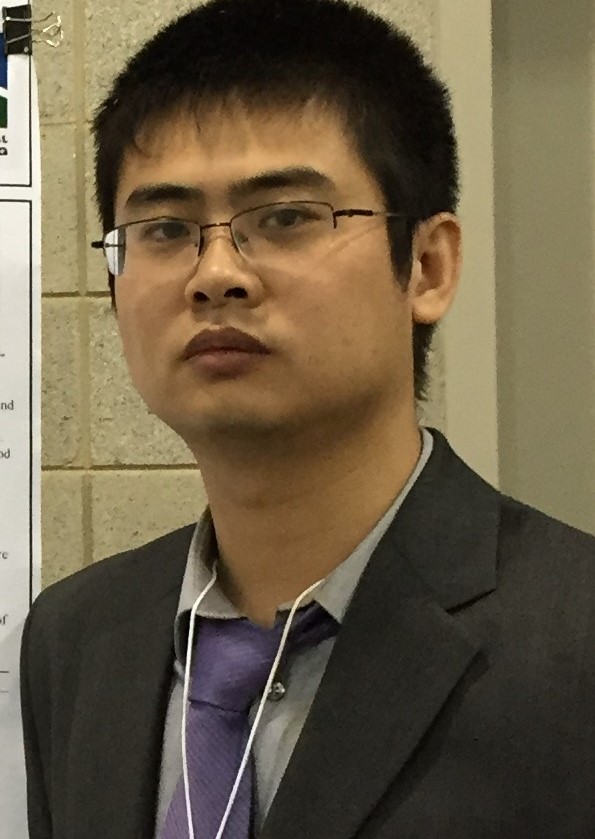
About me
This is the website of Han Qiu’s Hydrolab. I conduct research aimed at addressing critical global environmental and earth sciences issues. These encompass challenges such as algal blooms, groundwater contamination, hypoxia, seawater intrusion, carbon and nutrient cycle, energy transition, and the widening gap between water supply and demand, propelled by climate change, heightened extremes, human activities, and the resultant complexities in securing future provisions for food, energy, and water resources. I integrate process-based and data-driven modeling, remote sensing, field observations, and artificial intelligence (AI) to advance understanding and improve predictive capabilities of co-evolving processes across scales, from sites and watersheds to mesoscales. My work emphasizes advancing next-generation modeling frameworks to bridge climatological, hydrological, agroecological, environmental and anthropogenic processes, capturing their complex interactions and feedbacks, and to inform policy making. Beyond applying existing models, I emphasize the development of scalable parallel architectures for mesoscale, hyper-resolution Environmental and Earth system modeling, coupled with the integration of multiphysical, biogeochemical, energy system and human processes. More recently, I have expanded this integration to include the human dimension by coupling water and Earth system models with integrated assessment frameworks, linking hydrologic, geoscientific and socioeconomic processes with policies. This holistic approach enables the assessment of resilience and adaptability within interconnected environmental, ecological, and socio-economic systems.
Current Projects
- Simulating fine-scale wetland inundation and surface water–groundwater interactions to improve aquatic biogeochemical modeling using an integrated hydrologic and land surface framework. NSF FRES project.
- Evaluate the multifaceted impacts of solar energy expansion on agricultural lands and the food–water–energy nexus, and to advance sustainable agroenergy landscape science and design. NSF GCR project.
- Developing a near real-time digital twin of the Dallas-Fort Worth stormwater systems to enable data-driven analysis, long-term forecasting, and informed decision-making for sustainable urban development and effective stormwater. HUC flooding project.
- Development of hybrid process-based and machine learning model to simulate the water, nutrient and soil erosion dynamics.
Previous Projects
- Improve hydrologic representations in E3SM (Energy Exascale Earth System Model). Develop inter-grid lateral saturated and unsaturated flow and heat transfer processes in E3SM model. Development of Land-Ocean-Groundwater hydrologic coupling in E3SM. Apply parallel and cloud computing techniques to realize hyper-resolution integrated hydrologic and earth system modeling at continental/global scales. DOE SciDAC and ICOM project.
- Applications of artificial intelligence in hydrology, ecology and Earth system science.
- Quantifying Socioeconomic Impacts of Changing Arctic Ecosystems Using ABoVE Datasets in An Integrated Human-Earth System Modeling and Data Assimilation Framework. NASA-Above project
- Integrating field experiments, remote sensing, and process-based modeling toward improved understanding and quantification of watershed scale carbon cycling”, NASA Carbon Cycle Science Program.
- Developing integrated surface/subsurface flow and reactive transport processes in PFLOTRAN (Parallel Reactive Flow and Transport Model) for bridging the gap between terrestrial and aquatic biogeochemical processes.
- Climate Impacts & Risks Analysis – EPIC and SWAT modeling of crop yields, irrigation and environmental impacts. Evaluating the Impacts of Grassland to Crop Conversion on the Soil Erosion and Nutrient Loss in the Midwest of US, EPA project.
- Develop an operational Integrative Decision Support System (DSS) that utilizes a diverse set of models and data to aid water managers and agricultural producers in developing more sustainable decisions and futuristic planning for agricultural water uses under present and varying future climatic conditions. USDA-NIFA project.
- Development of Process-based hydrologic model to Simulate the water, energy and nitrogen dynamics with applications of multi-objective optimization at watershed scale. Synthesize approaches based on the Budyko curve and process-based modeling approaches to understand the space-time variability of water balance components in Great Lakes Watersheds, MI, USA.
- Research on the impact of spatial resolution of Soil Moisture Active Passive (SMAP) product on hydrologic modeling of soil moisture.
- Hierarchical groundwater modeling to study the salty water intrusion problem in Ottawa County, MI, using a 3-D groundwater model.
- Stochastic modeling of geological data and aquifer structure of Ottawa County based on Transition Possibility / Marcov Chain (TP / MC) model.